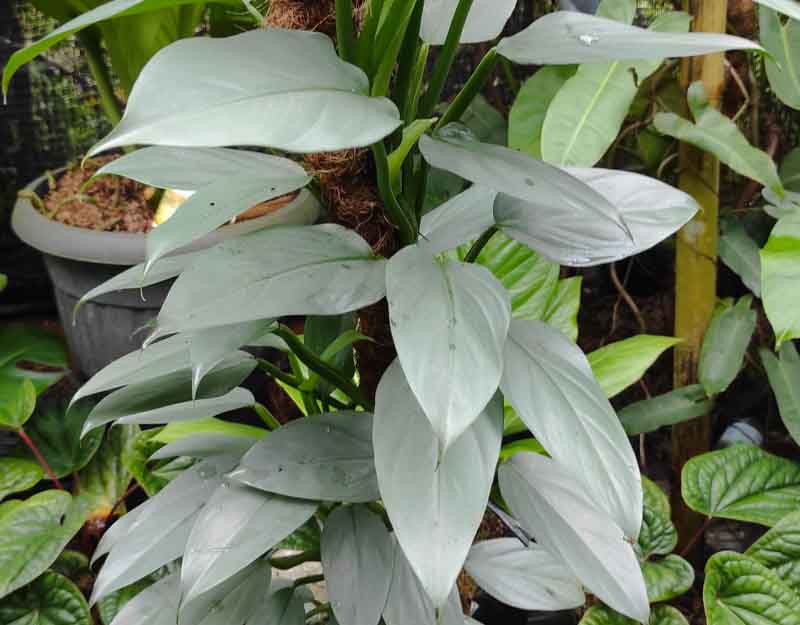
The Silver Sword Philodendron Hastatum is a stunning and exotic houseplant that has captivated plant enthusiasts with its unique appearance. Emerging from the dense tropical rainforests of South America, this plant is recognized for its striking silvery-green, arrow-shaped foliage.
Offering more than just a visual treat, the Silver Sword Philodendron, also known as the Philodendron Hastatum, is celebrated for its adaptability and relatively straightforward care routine, making it a cherished addition to any indoor garden.
Table of Contents
- Philodendron Silver Sword: Complete Care & Propagation Tips
- What Is the Optimal Light for Silver Sword Philodendron Hastatum?
- How to Water Silver Sword Philodendron Hastatum Properly?
- What Soil Is Best for Silver Sword Philodendron Hastatum?
- How to Propagate Silver Sword Philodendron Hastatum?
- What Are Common Pests That Affect Silver Sword Philodendron Hastatum?
- How to Troubleshoot Common Problems with Silver Sword Philodendron Hastatum?
- Related Questions on Silver Sword Philodendron Hastatum Care
Philodendron Silver Sword: Complete Care & Propagation Tips
Providing the right care for your Silver Sword Philodendron Hastatum is key to ensuring its vigor and longevity. Its care encompasses a range of practices from lighting to soil composition, which will be discussed in detail, giving your Philodendron the environment it needs to thrive.
Propagation of this houseplant is a rewarding experience that allows you to multiply your collection or share with fellow plant lovers. Stem cuttings are the most common method, which we will explore, providing you with all the steps needed to propagate successfully.
Understanding the specific needs of this plant will not only reward you with its growth but also with the lush, tropical ambiance it brings into your home.
What Is the Optimal Light for Silver Sword Philodendron Hastatum?
The optimal light for Silver Sword Philodendron Hastatum is bright, indirect sunlight. Direct sunlight can scorch its leaves, while too little light can cause leggy growth and a lack of coloration.
Consider placing your plant near an east or north-facing window where it can receive gentle morning light. If you have limited natural light, grow lights can be an effective alternative, mimicking the plant’s natural environment.
- East or north-facing windows are ideal
- Avoid harsh direct sunlight to prevent leaf burn
- Use grow lights if natural lighting is insufficient
Monitoring your plant’s response to its lighting conditions is crucial. Adjust its position as needed to find the perfect spot that it will love and reward you with steady growth.
How to Water Silver Sword Philodendron Hastatum Properly?
Proper watering is crucial to the health of your Silver Sword Philodendron Hastatum. Over-watering can lead to root rot, while under-watering can stress the plant.
Maintaining consistent moisture is key, allowing the top inch of soil to dry out between waterings. Employ a well-draining pot with drainage holes to prevent water accumulation.
Water thoroughly until excess moisture drains out. During the winter, when growth slows, reduce watering frequency to match the plant’s reduced needs.
- Wait until the top inch of soil dries out before watering
- Use a pot with good drainage to avoid waterlogging the roots
- Reduce watering in the winter months
What Soil Is Best for Silver Sword Philodendron Hastatum?
The best soil for Silver Sword Philodendron Hastatum is one that is well-draining and rich in organic matter. A mix of potting soil with perlite or vermiculite will ensure proper drainage and aeration.
To mimic its natural habitat, you can incorporate sphagnum moss or coco coir into the mix, which will help retain moisture while still allowing excess water to drain.
Regularly check the soil’s condition and refresh it as needed to provide a healthy environment for your plant’s roots, which is essential for its overall growth and vigor.
How to Propagate Silver Sword Philodendron Hastatum?
Propagating your Silver Sword Philodendron Hastatum is a straightforward process that can be accomplished through stem cuttings. Choose a healthy stem with at least two nodes and cut just below one of the nodes with clean, sharp shears.
Place the cutting in water or directly into moist soil, ensuring at least one node is submerged or buried where roots will form. With consistent care and patience, you’ll soon see new growth, indicating successful propagation.
Propagation not only expands your own collection but also provides a meaningful gift to friends and family who appreciate the beauty of houseplants.
What Are Common Pests That Affect Silver Sword Philodendron Hastatum?
While the Silver Sword Philodendron Hastatum is relatively resilient against pests, it is not immune. Common pests such as mealybugs, scale, and spider mites can infest your plant, particularly when stressed or in poor growing conditions.
Regular inspection can lead to early detection and control. If pests are found, isolate the affected plant and treat it with neem oil or insecticidal soap, following the product’s instructions for the best outcome.
Preventative measures, such as maintaining proper air circulation and avoiding over-watering, can greatly reduce the risk of pest infestations.
How to Troubleshoot Common Problems with Silver Sword Philodendron Hastatum?
Troubleshooting common problems with your Silver Sword Philodendron Hastatum involves being vigilant and responsive to any signs of distress. Yellowing leaves can indicate over-watering, while brown tips might suggest low humidity or under-watering.
Ensure that you’re meeting the plant’s requirements for light, water, and humidity, and adjust your care routine accordingly to address any issues. Puckering leaves may signal the need for more water, while leggy growth might mean inadequate light.
By paying close attention to your plant’s signals, you can maintain its health and enjoy the lush, tropical feel it brings to your indoor space.
Related Questions on Silver Sword Philodendron Hastatum Care
Is Philodendron Silver Sword Rare?
The Silver Sword Philodendron is considered to be a somewhat rare variety, prized for its unique color and shape. While it may not be the rarest philodendron, its desirability has made it a sought-after specimen among collectors.
Its rarity can also depend on your location and the availability of the plant in local nurseries or online marketplaces.
How Do You Care for a Philodendron Hastatum Silver?
Caring for a Philodendron Hastatum Silver involves providing bright, indirect light, consistent moisture without waterlogging, and warm temperatures. Use a well-draining soil mix and apply a balanced fertilizer during the growing season for optimal health.
Regularly inspect for pests or diseases and clean the leaves to allow the plant to photosynthesize efficiently.
Is Philodendron Silver Sword Easy?
Yes, the Philodendron Silver Sword is considered an easy-to-care-for plant, adaptable to various indoor conditions. Its straightforward care requirements make it a suitable choice for both novice and experienced plant carers.
With the proper care routine, they can grow vigorously and remain healthy, bringing a touch of the tropics to your home.
Do Philodendron Silver Sword Like to Be Root Bound?
While the Philodendron Silver Sword can tolerate being slightly root-bound, it does not prefer this condition. Over time, being root-bound can stress the plant and hinder its growth. Repotting every couple of years or when roots start to grow out of the drainage holes is recommended.
Choose a pot only slightly larger than the current one to ease the transition and encourage continued growth.
As we continue to delve into the care of this illustrious plant, let’s take a moment to watch a helpful video by a passionate plant enthusiast. Here, they share insights and personal experiences in nurturing the Silver Sword Philodendron Hastatum:
Remember, whether you’re a seasoned horticulturist or an aspiring green thumb, the Silver Sword Philodendron Hastatum offers not just striking beauty but also an enjoyable and fulfilling gardening experience.